


You’ve probably heard that if you don’t create a will or trust, “the state has one for you.” It’s true. In Illinois, if you die without an estate plan, the state distributes your assets according to rigid, court-applied formulas that don’t consider your unique relationships or preferences.
As an estate planning attorney in Evanston, IL, I help clients take that uncertainty off their plate. When people finally get their estate plan done—especially after putting it off for years—they often describe a deep sense of relief. My goal is to help you get there, with clarity and confidence, using a process that’s both approachable and thorough.
What Is Intestate Succession?
Intestate succession is the legal term for what happens to your estate when you die without a will. In Illinois, this process is governed by the Probate Act of 1975. Your assets will be divided according to a predetermined formula, known as the rules of descent and distribution.
This process doesn’t account for blended families, estranged relatives, close friends, stepchildren, or charitable goals. It’s just a formula.
How Illinois Divides Assets Without a Will
Here’s a simplified breakdown of how your assets may be distributed if you die without an estate plan in Illinois:
- Married with Children – Your spouse receives half the estate; your children split the other half.
- Married with No Children – Your spouse inherits everything.
- Unmarried with Children – Your children inherit everything equally.
- No Spouse or Children – Assets pass to your parents, siblings, or more distant relatives.
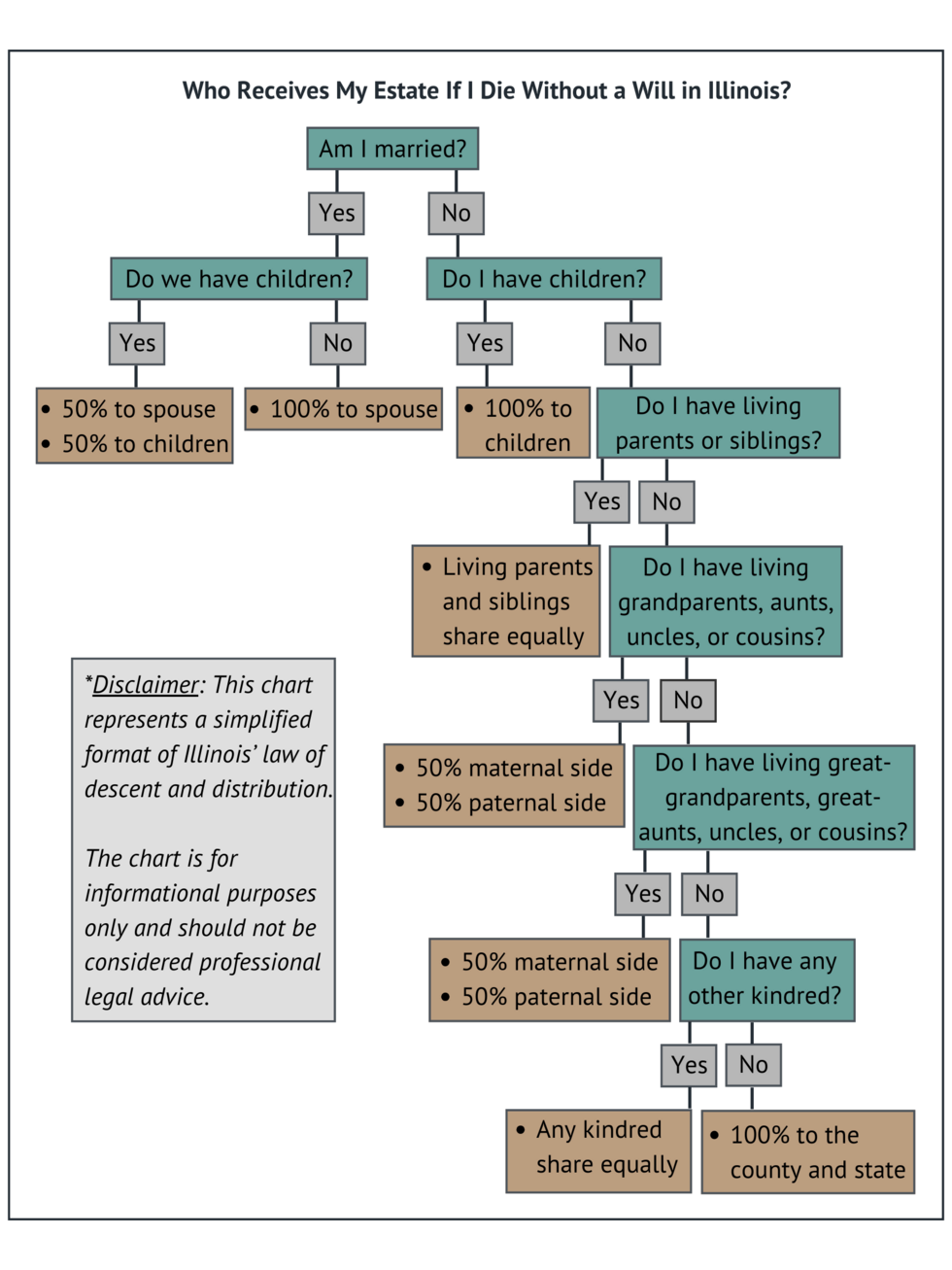
This chart helps visualize how your assets could be distributed if no plan is in place.
The Illinois Probate Process
Whether or not you have a will, your estate will likely need to go through probate if it’s worth more than $100,000 or includes real estate. Probate is a court-supervised legal process for distributing assets and resolving debts. Here’s why many people aim to avoid it:
- Delays in Distribution – Probate can take months—or longer if there are disputes. That delay can be stressful for heirs who may need access to funds.
- Added Costs – Attorney fees, court costs, and executor expenses reduce what your heirs actually receive.
- Lack of Privacy – Probate is a public process. That means your estate details become part of the public record, which some families would rather avoid.
The Hidden Challenges of Dying Without a Plan
Relying on intestate succession brings several limitations that often surprise people:
- You Forfeit Control – The state—not you—decides who inherits your estate.
- No Specific Gifts – You can’t leave your niece your grandmother’s ring, or donate to a cause you care about. Everything is divided generically.
- Heirs Receive Everything at Once – There’s no way to space out distributions or protect the inheritance from bad spending, lawsuits, or divorce.
- Minor Heirs Create Complications – If a child inherits, the court must appoint someone to manage the funds until the child turns 18—even if that’s not who you would have chosen.
These consequences are real. I’ve worked with families facing confusion and conflict because their loved one never got around to planning. Don’t let that be your story.
Why Create an Estate Plan?
An estate plan doesn’t have to be complicated. But it does need to be done. Here’s what a thoughtful plan allows you to do:
- Take Back Control – You decide who receives your assets—not the state.
- Make Specific Gifts – Leave meaningful items or amounts to specific people, organizations, or causes.
- Avoid Probate Hassles – A properly funded trust can bypass probate entirely.
- Protect What You Leave Behind – Use trusts to space out distributions, shield inheritances from legal threats, and support beneficiaries in a way that makes sense for them.
If you’re a parent, you can also name guardians for your minor children—without relying on a will to distribute your assets. Planning gives you options and peace of mind.
Conclusion
Dying without a plan means handing the wheel to the state—and hoping it drives your legacy where you want it to go. But you don’t have to leave things up to chance.
As an estate planning attorney in Evanston, IL, I help people like you create plans that reflect your values and protect the people you care about most. If you’re ready to take this off your mental to-do list, I’m here to guide you through the process—step by step.

